Guides · · 6 min read
How should an electrician's phone sort emergency calls from quote requests?
An electrician's phone mixes sparking outlets with requests for garage outlets. Here is how to sort them, what to ask each caller, and where a receptionist stops.
By the Global AI team
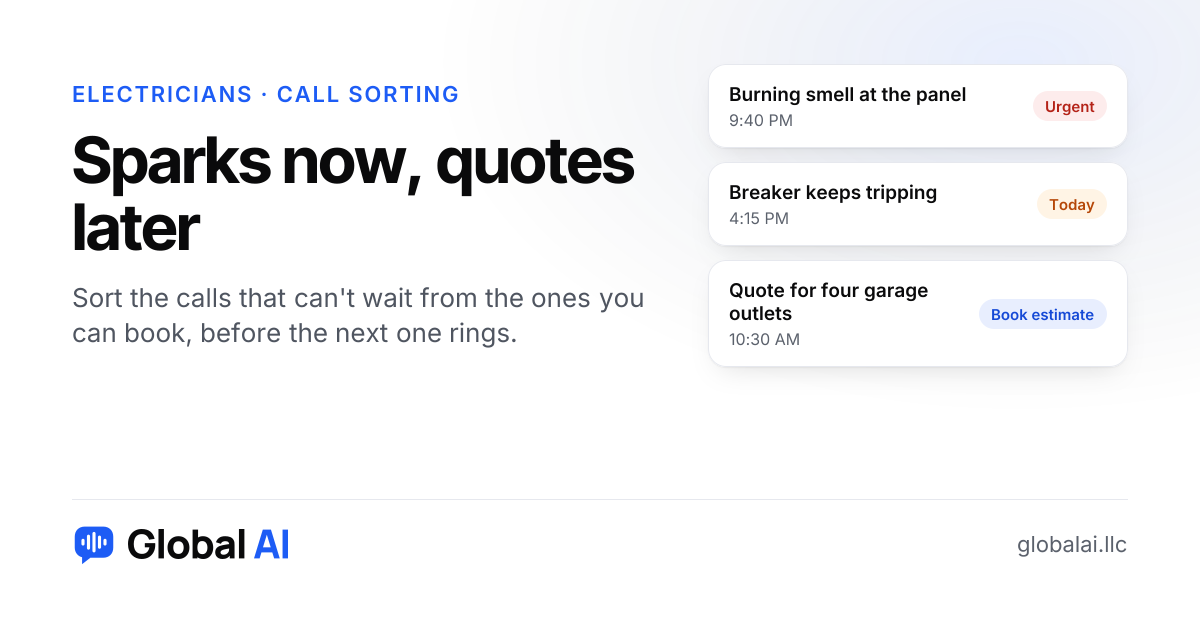
Sort electrical calls by risk, not by the order they came in. Sparks, a burning smell or smoke goes to you right now, and the caller is told to call 911 if there is fire. A breaker that keeps tripping is a visit today. A quote for new outlets gets the address and the scope, then a booked estimate.
Why do electricians get such different calls?
In one afternoon you can field a woman whose outlet is warm to the touch, a landlord who wants a smoke detector swapped, and a contractor asking if you can start a panel upgrade in March. All three call the same number. Only one of them might be in danger, and you can't tell which until someone asks.
When you're standing in front of a live panel, you aren't picking up. The call goes to voicemail, you listen to it at lunch, and the outlet that was warm at 9 a.m. is a different problem by noon. The fix is to decide, in plain words, which calls reach you the moment they come in.
Which electrical calls can't wait?
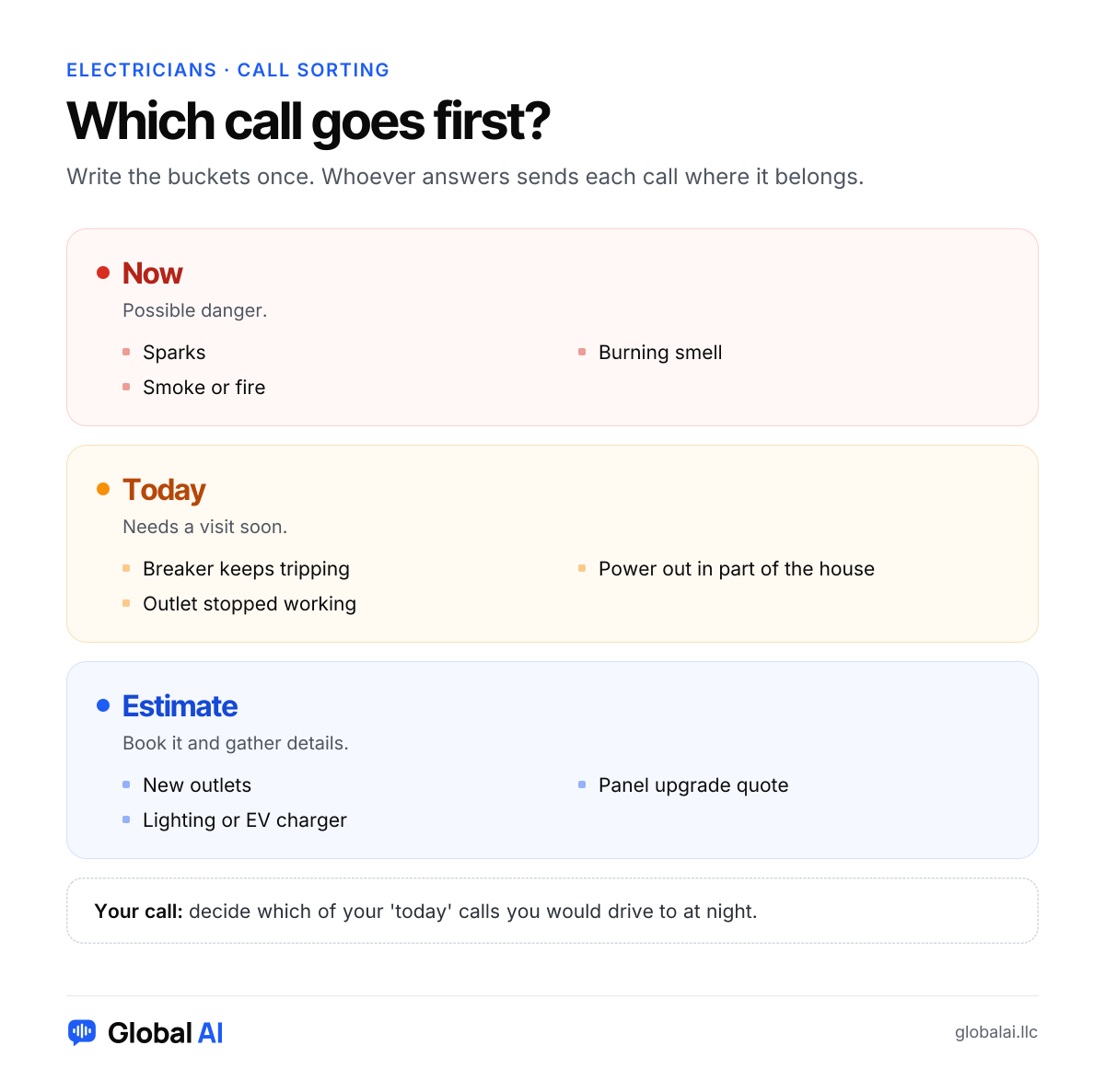
Anything that sounds like fire risk goes first: sparks, a burning smell, smoke, a panel that's hot. Your receptionist's job on those calls is short. Get the address and a callback number, say that your team has been alerted, and make sure the caller knows to call 911 if there is smoke or fire. You write that instruction. It won't invent safety advice on its own.
It also won't diagnose. Our electricians page is explicit about this: if something sounds unsafe, the call is flagged as urgent and the caller is told your team will follow up right away. That's the right limit. Telling someone over the phone that their panel is probably fine is a mistake only an electrician in the room should make.
What should you ask before you book a quote?
Estimates fall apart on missing details. A voicemail that says 'I need some outlets, call me' costs you a round of phone tag before you know whether it's a small job or a rewire. The receptionist can ask for the address, how many outlets or fixtures, whether the walls are open or finished, and what the caller is trying to do. You decide the questions once, then every quote request arrives with the same facts.
It can book the estimate visit as well. Tell it which visits you offer, and it books the right one or takes a request for you to confirm. Calendar booking into Google Calendar is on Growth and up.
Who gets the urgent call when you're up a ladder?
Urgent calls are flagged and sent to you right away on every plan. If you have a second electrician on call, Growth and up can transfer the caller live. Starter has no live transfer. For a solo electrician who calls back between steps that's workable, though a three-person crew with a rotating on-call person probably wants the transfer.
A word on the in-between calls. 'My lights flicker sometimes' is not an emergency until it is. Decide where those go, write it down, and revisit the rule after the first month. Most owners find the line moves once they see what actually comes in. Our guide on missed calls in home service businesses has a way to find that out from your own phone log.
What do you see when you get back to the truck?
A summary of each call: who called, the address, what they said was wrong, and how urgent it sounded. That's the part that changes the day. You can read four summaries in the truck and decide that the tripping breaker goes first, the garage outlets wait until Thursday, and the landlord's smoke detector gets a call tomorrow morning. Without it you're replaying voicemails and guessing.
It's worth reading the first week of summaries critically. If you find calls marked urgent that you'd have called routine, or the other way around, change the rules. The setup is yours, and it gets better the more you tell it about how you work.
When is an AI receptionist not the right fit for an electrician?
If you employ a dispatcher who answers every call within seconds, day and night, you have this covered. If you run a commercial shop where most calls are existing clients who want a specific foreman, a general receptionist adds little. And if you want the phone to judge whether a symptom is dangerous, no tool should do that for you. Its value is catching the call, getting the details and getting the right ones to you quickly.
Questions electricians ask
Will it give electrical advice?
No. It doesn't diagnose problems over the phone. If something sounds unsafe, it flags the call as urgent and tells the caller your team will follow up right away.
Can it book estimates separately from repairs?
Yes. Tell it which kinds of visits you offer and it books the right one, or takes a request for you to confirm.
Does it answer at night?
Yes. It answers 24/7, including nights, weekends and holidays, and every call is summarized for you.
Can it transfer an urgent call to me?
Live transfer to you or your team is on the Growth plan and up. On Starter, urgent calls are flagged and sent to you right away.
Do I need a new phone number?
No. Most businesses keep their number and turn on call forwarding: for every call, only when the line is busy, or only after hours.
Try it with a bad day's worth of calls
Call the demo line at (856) 595-0295 and describe a burning smell, then a quote for garage outlets, and compare how the two are handled. When you're ready, you can start free with no credit card, or call us at +1 (929) 286-5650.