Guides · · 6 min read
What should a plumber's phone do the night the first cold snap hits?
The first hard freeze is when plumbing phones go quiet or go wild. How to decide what counts as urgent, who gets called, and what to tell callers before you can get there.
By the Global AI team
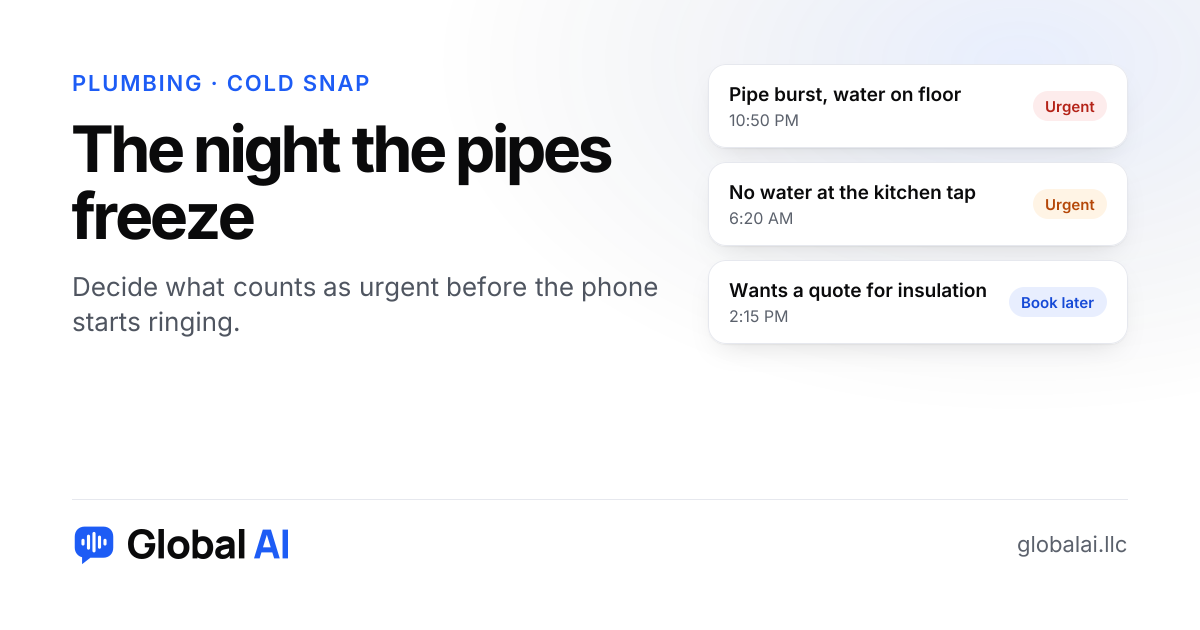
On the first night of a hard freeze, a plumbing phone should do three things: separate calls with water running from calls with no water, get the address and a working callback number every time, and tell the caller what happens next. If you're under a house when it rings, it's the receptionist that does this for you. The rest is deciding your rules before the rush.
Why is the first cold snap different?
Most of the year, plumbing calls trickle in. Then the temperature drops overnight and half your customer list discovers a problem at once. You know this, because you've lived through it: the phone rings while you're on a job, a second call stacks on top of it, and by the time you come up for air you have eleven voicemails. Some are floods. Some are people who'd like a quote for next month. They sound the same in the order they arrive.
The expensive mistake isn't missing every call. It's treating them in the order they came in. A homeowner with water coming through a ceiling will not wait for you to finish the voicemails, and the homeowner asking about insulation will not mind a call tomorrow.
How do you decide what counts as urgent?
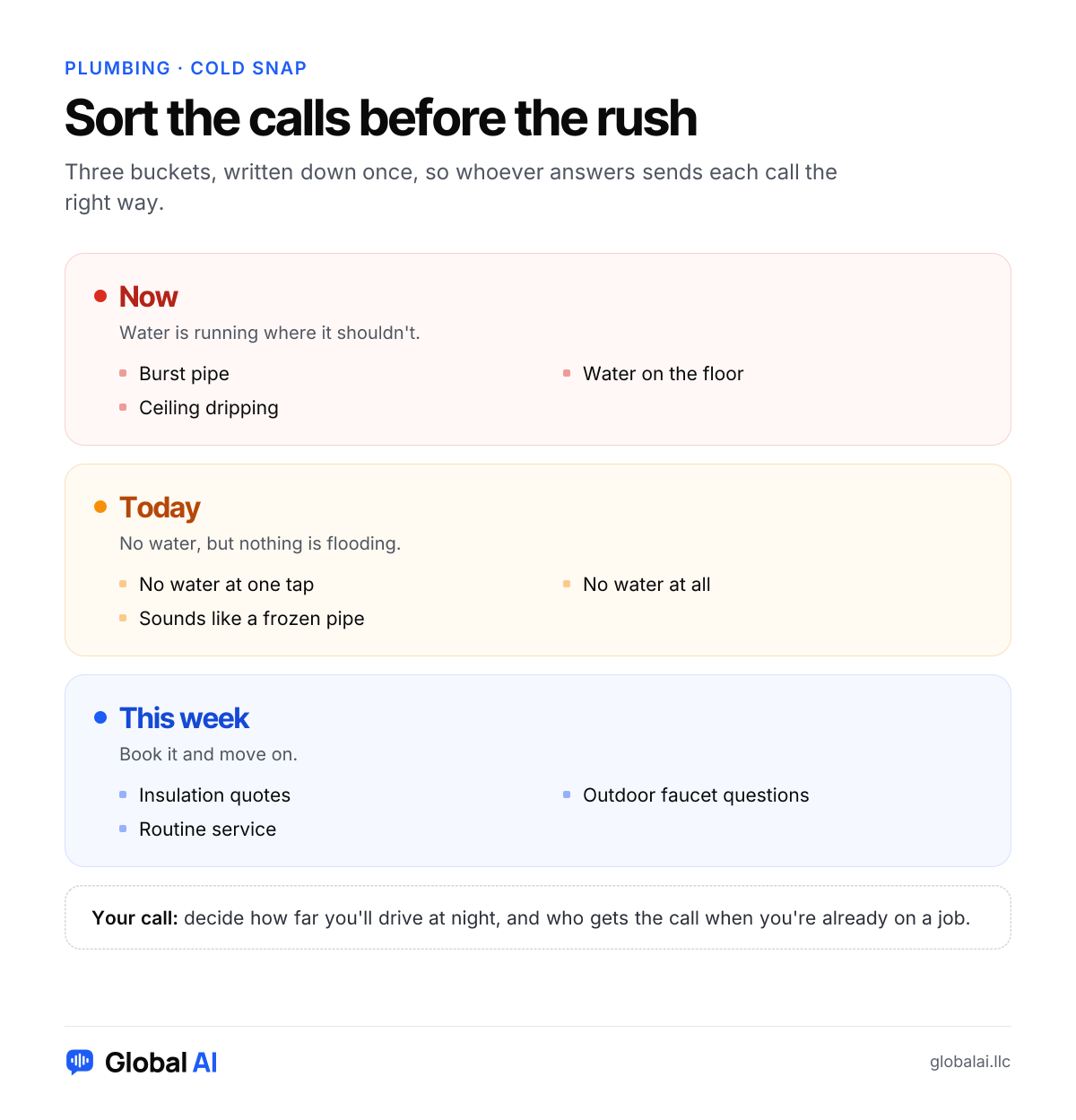
Write it down in plain terms, the way you'd explain it to a new hire on their first day. Water running where it shouldn't is now. No water, with nothing flooding, is today. Everything else gets booked. You can add your own lines: a no-hot-water call from a family with a baby might jump the queue for you, and that's your call to make.
Our plumber page has the same idea in more detail, and a longer look at what the phone can and can't do is in our guide for plumbers. The point for this week is simply to have the three buckets decided before the weather decides for you.
What should callers hear while you're on the way?
A frightened person wants three things: to know someone has heard them, to know what to expect, and a name or number to follow up with. The receptionist can ask what's happening and how urgent it is, take the address and a callback number, and tell them the team has been alerted. What it should not do is promise an arrival time you haven't agreed to. Decide ahead of time whether it says "we'll call you right back" or gives a window, and keep it honest.
Be careful with safety advice, too. Your receptionist follows the instructions you write, so if you want it to say "shut off the main if you can find it," you have to write that in. Many owners prefer that urgent callers hear only what the shop has decided, and nothing more.
Who gets the call when you're already on a job?
Urgent calls are flagged and sent to you right away on every plan, so you can call back between steps. If you have someone on call, the Growth plan and up can transfer the caller to them live. On Starter there's no live transfer, which is fine for a one-person shop that calls back, and a poor fit for a three-truck crew that wants a dispatcher on the line.
One more setup detail: 30 free minutes is enough to call your own number from a second phone at night, describe a flooded kitchen, and see what lands in your inbox. Do that this week, not the night of the freeze.
When is a receptionist not the answer?
If you already have a dispatcher who answers every call, quickly, all night, you don't need one. If your cold-snap volume is five calls and you answer them all, the money is better spent on a heat gun. And a receptionist can't tell a caller whether their water heater is safe to relight or whether a pipe is about to split. That takes a plumber, and sometimes the right answer is a different emergency number altogether. A good setup flags those calls and tells you right away, rather than pretending to diagnose.
Questions plumbers ask before the first freeze
Can it tell a flood from a slow drip?
It asks what's happening and how urgent it is, and follows the rules you set for what counts as urgent. Urgent jobs are flagged to you right away.
Can it send an emergency call straight to my phone while I'm on a job?
Urgent calls are flagged and sent to you on every plan. Live transfer to you or your on-call person is on the Growth plan and up.
Does it work at night?
Yes. It answers 24/7, including nights, weekends and holidays, and every call is summarized for you.
Can it book a plumber for tomorrow morning?
It can take booking requests on every plan. Google Calendar booking is on the Growth plan and up. Text confirmations are coming soon but not available yet.
Do I have to change my phone number?
No. You keep your number and forward calls to the receptionist all the time, only when you're busy, or only after hours.
Test it before the freeze
Try the demo line, (856) 595-0295, and ask Ava what she'd do with a burst pipe at 11 PM. When you're ready, start free with no credit card and build your own three buckets. If you'd rather talk it through, call us at +1 (929) 286-5650.